Whenever I have questions about how
to translate it, where to buy it or how to prepare it, I find the people in my
circle of olim incredibly helpful.
When I asked fellow olim to share their
tips for food shopping in Israel, I was overwhelmed with hundreds of Facebook
messages and emails. I went to work, culling the duplications, deleting the personal
opinions (unless they were mine) and dividing the responses into information
about specific food items and miscellaneous tips about food shopping in
general.
This took many, many hours more
than I intended, but there's some really quality (and money-saving) information
here.There is nothing about this post
that pretends to be scientific or comprehensive. It's information that a very
giving group of olim thought to share. I did my best to organize it. In some
cases, Hebrew names are transliterated and in some case they are spelled in
Hebrew letters. It depends on how I received the information.
My deep thanks to the members of the anglo olim community who responded
so generously.
And now, here are some things we have
learned along the way that might make things easier for you, whether you've yet
to make aliyah or have already been living here for some time. Naturally, I take full responsibility for any errors.
SPECIFIC FOOD ITEMS
Apple sauce: Canned resek
tapuchim is not actually apple sauce. It has pits and skin. It can be used
for
baking.
Baking powder: Avkat
afiya (אבקת אפיה)
is baking powder, but it often says it in
English as well.
Some advise importing baking powder. Sold in little packets, usually 10
per cellophane wrapper. One packet is about one scant Tbs.
Baking
soda: Soda leshtiya (drinking soda) is baking soda. It comes in little
blue boxes next to the vanilla sugar. You can also find baking soda in decent-sized plastic containers (clear
plastic, like the spice jars). It is sometimes labeled as Sodium Bicarbonate in English.
Bananas: It took me awhile to get used
to Israeli bananas. They are slightly different. Although bananas are generally
available year round, summer bananas often go from green to overripe without an
edible stage in between. Winter bananas are much better. Also, Israeli bananas
may look more brown and bruised than you're used to on the outside and still be
perfect inside.
Bread:
· There is great
bread in Israel, but it's not always possible to find an exact duplicate for
what you are used to.
· There are a
couple of brands of packaged, lower calorie breads that are widely available.
· There is no such thing as white bread
in Israel. The closest is called לחם אחיד,
a government subsidized light rye.
· There is also a government subsidized
challah. It's very plain and very inexpensive.
· Real Jewish rye bread
is almost impossible to find unless you go to a special boutique like bakery
such as Teller in Machane Yehudah (the shuk) in Jerusalem.
Bread crumbs: Come in cellophane bags,
not cardboard canisters.
Broccoli: I had to forget all about the 10 oz boxes of chopped broccoli that were a staple in my American kitchen. I buy the 800 gram bags from the freezer case and I learned to slice the florets into smaller pieces for quiches and soups. I tried kitchen shears but a sharp knife on mostly defrosted florets works best. I've seen the price range by brand from 13 NIS to 40 NIS for the same amount of frozen broccoli. Bodek brand is available here but it's the highest priced.
Brussel sprouts: Frozen only. Imported.
Not widely available.
Buttermilk: Rivion is the closest
substitute, but you can often substitute with gil or leben. Or use milk and a
bit of lemon juice.
Chicken:
·
It's often cheaper fresh than frozen.
·
If you buy frozen, check the date it
was frozen.
·
Whole chickens cut in quarters or
eighths are not sold here.
·
Buy a decent pair of chicken shears and
learn to cut up whole chickens.
·
White meat is often cheaper than dark.
·
There is a difference
between chicken wings for cholent and normal ones.
Cooking cream:
·
Called
shemenet l'vishul.
·
Comes in 250
ml and 500 ml cardboard boxes like juice boxes.
·
Comes in 23%, 15%,
and 10%.
·
There is also
a pareve version, though that's harder to find.
·
Half and half doesn't
exist here. If you want coffee cream buy 10% cooking cream.
Cornmeal/Cornflour/Cornstarch -
"Cornflor" can be either cornmeal (sometimes called kemach tiras and
sold in the same section of the store as beans) or cornstarch (sold in the
baking aisle).
Cheese:
·
Lots of people
mentioned that it was scary to use to cheese counter but so worth it.
·
Sliced and
grated cheese are significantly cheaper when purchased from the cheese counters.
·
The cheese counter is also likely to
have types of cheese that you won't find in packages - like cheddar and feta.
·
If it's not crowded at the cheese
counter or the cheese stand in Machane Yehudah (the shuk), you can ask to
taste different cheeses.
·
You can ask at the cheese counter to
slice your cheese thin.
·
Tnuva makes cheddar
but it's very very mild. Ask for something "charif yoter" (sharper).
·
Many
supermarket deli counters have pre-sliced packages of popular cheeses, such as
Gilboa and Emek. This obviates the need to wait in line and is the same cheese
that you have sliced to order at the counter. There are also pre-packaged
grated cheeses, such as mozzarella and parmesan.
·
If you go to
the cheese counter and ask for a mix you get shredded scraps of whatever's left
over at the time.
·
Gvina levana
(white cheese) is like soft cream cheese, with a little less tang.
·
Hermon is like a
salty farmers cheese or a way less salty feta.
·
Baby belle cheeses in the red wrappers
are not kosher in the US but are kosher here.
·
The cheese market in Machane Yehudah
(the shuk) in Jerusalem has amazing white cheddar cheese from England that is
OU.
·
Israel has lots of other cheeses that
you can't get kosher in the US.
·
Tiv Tam cheese can most closely be
described as pressed cottage cheese, but it's actually strained gvina levana.
It is also used as a substitute for Philadelphia cream cheese in cheesecake. It
comes in a block wrapped in plastic see through wrap. It spoils quickly so buy
it close to use.
Cream Cheese:
·
Philadelphia is occasionally found here, but
it's expensive.
·
Gvinat
shamenet which is the cream cheese sold in the
rectangular containers has a softer consistency. There is one in a black
and white speckled tub that looks like a cow pattern and spreads like light
cream cheese from the US.
·
The one most like whipped cream cheese here is Napoleon
brand (gold & white container) gvina
shamenet b'signon Tzarfati and comes in cups in a few varieties. The
one with the yellow daisy is plain.
·
Some people make their own cream cheese. Take a cheese cloth and hang Israeli 5% cream
cheese over night and in the morning you will get the cream cheese you are used
to.
·
Another way to make your own cream
cheese: add 1/8 teaspoon salt to shamenet and let it strain. You are left with
whipped cream cheese.
·
Some use Israeli gvina levana instead of American-style cream cheese for cheesecake
Crembo: A marshmallow, cookie and chocolate
confection that's ubiquitous in the winter and nowhere to be found in the
summer. Comes in mocha and vanilla, in 8 and 40-packs.
Dairy products: Like milk in the US, many dairy products in Israel come in different fat percentages.
This is true for sour cream, hard cheese, cottage cheese, yogurt and, of
course, milk.
Deli:
·
Pastrama is not pastrami. It's turkey
breast in different incarnations.
·
Try כתף בקר as an affordable beef cold cut.
·
Pastrama cafrit is close to American
turkey bologna.
Eggs:
·
There are two dates stamped on eggs. The earlier
one is the freshness date if the eggs are unrefrigerated. The second is the freshness date when they
are kept cold.
·
Egg shells are not, ahem... pristine here. Washing
them introduces bacteria into the egg. They are, however, generally much
fresher. You'll get used to it.
Egg noodles: Called itriot beitzim
Flour:
·
White, whole wheat and 70% whole wheat
are widely available.
·
Flour is sold by the kilo to avoid
infestation.
·
Pre sifted is very expensive. Consider
buying an electric sifter.
·
I have found the
texture of the flour somewhat different, requiring that I add a bit more flour
to some recipes.
Grains:
Grains should not be bought in a corner store, but rather in
one with a large turnover. When buying grains in cellophane, lift up one corner
and check for webs, an indication of infestation.
Hawaij: a Yemenite spice blend to give soups
soup/cholent/stew a rich flavor.
Herbs: Some herbs, including parsley (petrozilia), dill (shamir) and celantro or coriander (cuzbara) are highly perishable.
Cut them up and put them in small plastic bags and freeze. Use as
needed.
Hot dogs: Israeli hot dogs are generally chicken. Beef
hot dogs are harder to find. Chofetz Chaim (a Jerusalem butcher that might be
worth getting to know) sells beef hot dogs that are the closest to tasting like
an American hot dog and they cost the same as the Israeli beef hot dogs. Also
try the Tirat Zvi brand beef naknik americai
which come in a package of six.
Ketchup: Israeli ketchup is sweeter. Heinz is widely available. We
buy cheap Israeli ketchup for cooking and Heinz for french fries and burgers.
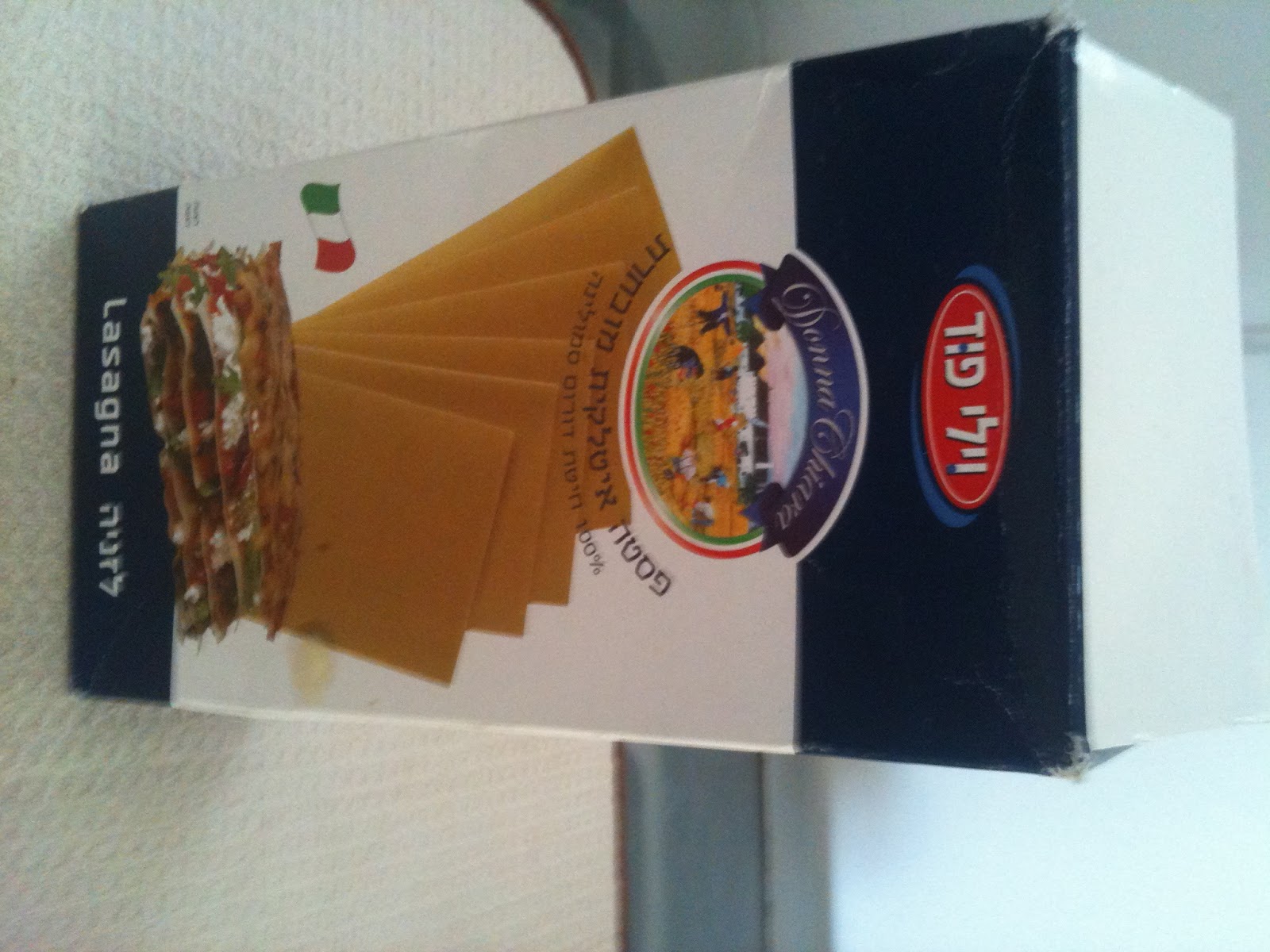
Lasagna: Comes in boxes about half the height of a 1-pound box. Dry
lasagna is completely flat (no ruffled edges) and is both wider and thinner
than lasagna in the US.
Leben: The pink and orange Yotvata brand leben
tastes just like yogurt, is one-third the price and has natural colors from carrots and beets.
Lemon syrup: Try Prigat brand
lemon syrup to make lemonade and sweetened iced tea.
Margarine: One
stick of American margarine/butter is 100 grams (half an Israeli stick).
Blue Bond stick margarines are widely available and come in yellow wrapper
(unsalted), blue (salted), red (butter flavored). Yellow is best for baking.
Meat:
·
You can get basar
chamim (chulent meat) already cut into chunks.
·
Check that meat is kashered--sometimes
it's sold without soaking/salting.
·
Ground meat is often mixed with soy.
·
Osher Ad and Rami Levy Mehadrin, both
in Givat Shaul, have great selections of the OU Kashrut Israel line called
"It's Fleisch" frozen meats with the names we are familiar with, such
as brisket, corn beef, etc.
Milk:
·
Skim milk is hard to find.
·
Generally, you can find 1% (red) and 3% (blue). Whole
milk is basically 3%. These are the opposite colors from the US.
·
Sometimes 1.5% is available.
·
Milk comes in liter cartons and plastic bags. The
bags are 1 liter, which is basically 4 cups.
·
Milk in plastic bags is price-controlled and
should cost the same anywhere. It is also cheaper in bags than in cartons.
·
There are clear produce bags near the tubs of
milk bags. I have found that the produce bags begin to tear if you put more
than 2-3 bags of milk in them.
·
Milk doesn't have vitamin D added
unless you buy Yotvata or Tnuva brand 3% milks.
Milk drinks:
are milk with water and other flavors added
Oats: Plain oats are found next to the sugar free
stuff, or granola bars, health food, but never with flours, cereals, or grains.
Instant oats can be found in almost any supermarket, but the price is around twice
that of in the Machane Yehuda shuk, where you can also buy coarse oats. This is
called Qvaker (from Quaker Oats.) There is Qvaker Dak-instant oats and Qvaker
Ave-the coarse oats. You can also find these at a health food store.
Onions: Yellow (though they are called batzal lavan) and sometimes
red onions are available. Raw onions are very strong here and peeling them is a
challenge. I have never seen Vadalia onions in Israel.
Paprika: Paprika is sold with and without oil and hot and sweet.
Hot paprika is not a bad substitute for cayenne pepper.
Parsnip: Occasionally
available in winter in limited markets.
Pastry:
·
Sufganiyot in Israel are not the same
as American style donuts.
·
Herby Dan, Mr. Donut and Brooklyn Bake
Shop have American style donuts.
·
Brooklyn Bake Shop has awesome black
& white cookies (and a black & white cake) as well.
Pastry Dough/Pie Crust
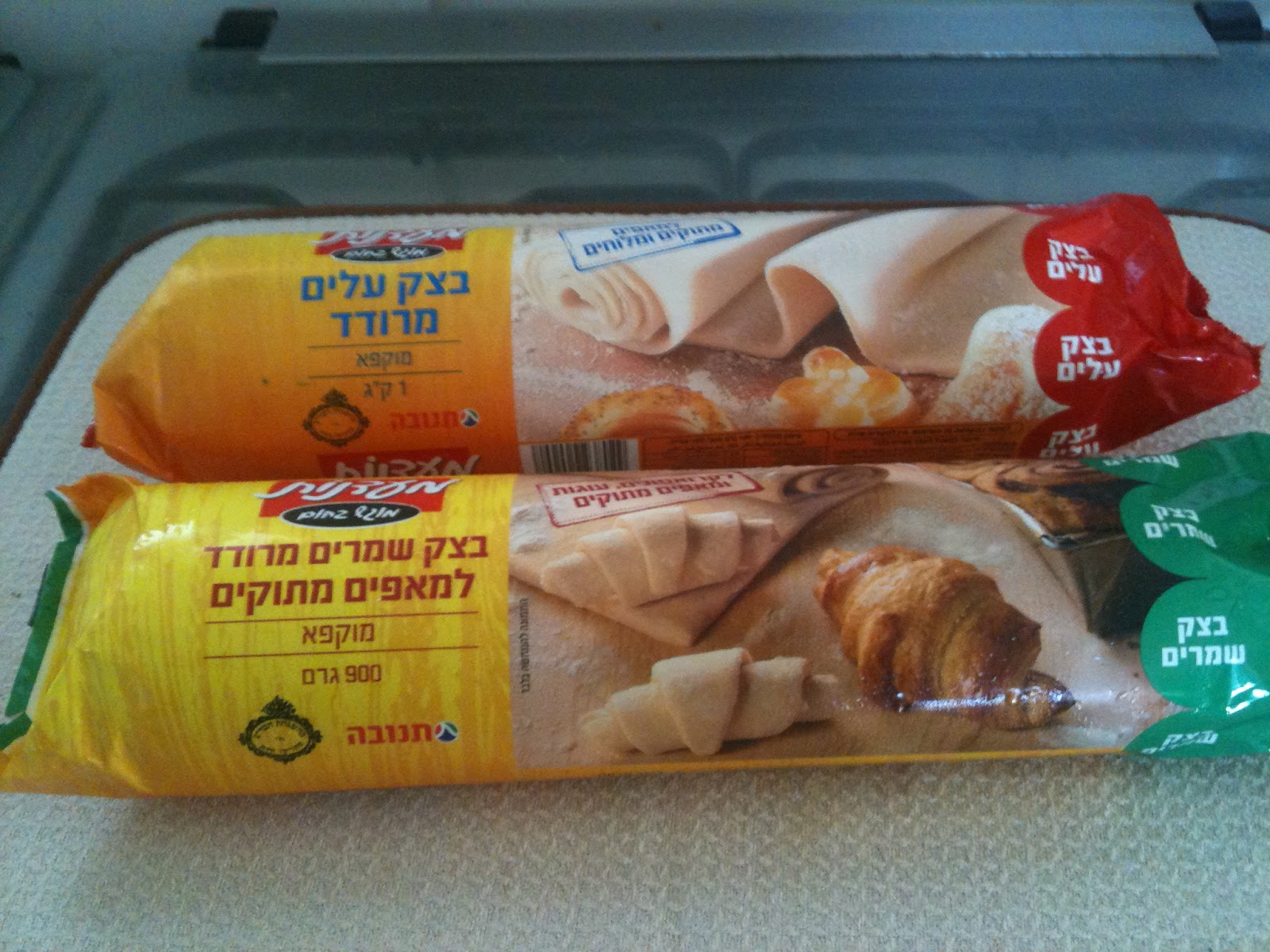
It is possible to find prepared graham cracker crusts in Israel. If you use them, stock up when you see them because they are hit or miss. Some stores that cater to American olim sell pareve
Oronoque prepared pie crusts, but they are very expensive. A great alternative is the widely available puff pastry dough . Comes in a sweet variety (called batzaik sh'marim - metukim in the green wrapper below) and a plain (batzaik alim). There are several brands. I have never been able to distinguish a flavor difference, so I just buy whichever is cheapest. They go on sale often.
Pickles: come in brine or in vinegar. Brine is
most familiar to Americans.
Potatoes:
·
Thin-skinned red and white potatoes are widely
available. I hardly ever peel potatoes anymore.
·
If a grocery store sells potatoes in a mesh bag,
it's perfectly acceptable to open the mesh and take only the size and quantity
of potatoes you need.
·
I have seen fresh new potatoes (small) in the
gourmet produce section. They are expensive.
·
Since canned potatoes are hard to find here, I
just use sliced fresh potatoes in my brisket.
·
No russet/Idaho potatoes here.
Pizza sauce:
יחין makes great lasagna
and pizza sauce and they are very affordable. They come in tubs like the tomato paste.
Rubbing alcohol: comes in a tiny
bottle and looks exactly like nail polish remover (acetone).
Salsa Rosa - a combination of sour cream and tomato sauce. Very
common pasta sauce in restaurants.
Shamenet: Generally refers to sour cream (shamenet chamutza).
But the word also refers to cooking cream (shamenet
l'vishul), cream cheese (gvinat shamenet) and whipping
cream (shamenet lhaktzafa which is 38%).
Silan: Date syrup that makes a great substitute for
honey or molasses.
Soup mix: Available in 1 Kg
bags as well as the more familiar plastic tubs. Chicken soup mixes are
available pareve and meat. Osem makes both without MSG.
Sour cream:
·
Called shamenet.
·
Comes in 4-pack of small plastic tubs (200 ml
each) or in 1/2 liter containers.
·
Sour cream is a perfect substitute for ricotta
in baked pasta dishes such as lasagna.
Spices:
·
Spices are
often located close to the meat counter and not the baking aisle
Strawberries: Strawberry season in Israel is winter.
Sugar:
·
Sugar (white and brown) is a bit coarser than
Americans are used to.
·
White sugar comes in paper or 1 Kg clear plastic
tubs. A kilo in a paper bag is much cheaper so I buy in paper and refill the
plastic tubs.
· I reuse
the tubs to store bread crumbs, rice and other grains.
·
Brown sugar comes in the same 1 Kg clear plastic
tubs.
·
Both dark and light brown sugar are
available.
·
Dark and light brown sugar can sometimes be found in large
plastic bags.
·
Light brown sugar is called demerara
sugar.
·
Confectioner's (icing) sugar (אבקת
סוכר) comes in small packets. One packet is
3/4 c.
Sweet red pepper: Gamba
Swiss chard: the mehadrin packages of what is called
alei selek is actually swiss chard.
Techina: buy plain techina paste, add water,
lemon, olive oil, garlic and spices for techina. Add water and honey for halava
spread.
Tomato paste:
·
Comes in cans and small red plastic tubs,
generally two or four together.
·
There are codes on tomato paste that refer to
the thickness of the paste.
·
Tomato paste
concentration is measured in BX (pronounced 'bricks'). The higher numbers are
more concentrated (less water).
·
Tomato paste is
typically sold in 22⁰BX or 28⁰BX. 22⁰BX is less concentrated than 28⁰BX.
·
Some say 22⁰BX is tomato sauce.
Vanilla: Imitation vanilla is widely
available. Real vanilla is very expensive. If you're a baker, you might want to
import real vanilla or learn to make from vanilla bean and vodka.
Vanilla sugar: This is sugar made with
vanilla beans or mixed with vanilla extract. Comes in small packets. One packet
is a scant Tbs.
Vinegar: White vinegar here is synthetic. Natural
vinegar here is light brown but tastes exactly like natural white vinegar from
the states.
Yeast: Yeast comes in many different forms.
Fresh yeast comes in 4 ounce cubes or in granulated form in packaged from the
company Shmirit. Dry yeast is sold in
the baking department, generally in 500 gram vacuum sealed foil packages.
MISCELLANEOUS
TIPS
American products:
Some stores in neighborhoods that cater to American immigrants carry a lot of
imports that are not otherwise generally available.
Cartis Moadon: This is a store loyalty
card. It's usually the first thing a cashier will ask you in any grocery store.
"Cartis moadon?"
Cleaning the kumkum: If you use your
kumkum (electric kettle) for a long time you will get calcium deposits
inside. Put in a few tablespoons of
lemon salt (melah limon), boil the water and leave over night. In the morning,
rinse it out and it will be all clean with no scrubbing.
Cooking from scratch: You will likely do
much more cooking from scratch since many prepared/convenience foods are not
available in Israel. It's often healthier, and definitely cheaper.
Grocery stores:
·
All grocery stores offer delivery
service in Israel, but stores in charedi areas in cities will often
automatically offer delivery, without you needing to ask.
·
Supersol (Shufersol) is a very good store
brand and their products are worth trying.
·
It's a different culture. In Israel,
people will leave a half-empty cart on line, holding their place, while they
finish their shopping. This annoys some people.
·
You have to visit a fair number of
stores to understand the lay of the land in terms of what is available. Many
interesting items can be found in health food stores such as Eden Teva Market
in Ramot.
·
Prices are not the
same in every branch of a store chain.
Kitniyot at Pesach: Oy! This is a whole
separate discussion. Suffice it to say if you don't eat kitniyot on Pesach,
you're going to need to take a knowledgeable friend to the store with you when
you shop for Pesach. And you're going to need to learn the words, lo chashash kitniyot which means there
is no suspicion of kitniyot and you can buy it and l'ochlei kitniyot, which means it's kosher for Passover for those
who eat kitniyot.
Stores
in certain neighborhoods in Jerusalem, in Modi'in Illit and other cities that
specifically cater to American and/or Ashkenazim will have more options than in
most of Israel where the majority are kitniyot-eating Sefardim.
Make friends with your grocer. He can
teach you tips about how things are used in Israel with which you are
unfamiliar -- and you can get a Hebrew lesson in the bargain.
Packaging: Many more things are
packaged in cellophane than in cardboard (e.g. bread crumbs, pasta, etc.)
·
Eating seasonal is a new concept. You
can't always get what you want when you want it. On the other hand, it's always
a joy when new fruits come into season.
·
On Sunday evenings, the fruits and
vegetables at the Jerusalem shuk are cheaper than usual.
·
The internet is a
great resource for learning how to use ingredients with which you are not
familiar (e.g. kohlrabi, dragon fruit, etc.).
Quantities:
·
Packages are
generally much smaller in Israel. Perhaps that's due to the fact that people
have less room to store things and there are no warehouse clubs here.
·
The one
consistent exception is toilet paper which seems to come only in large
quantities.
·
Certain common
spices come in very large containers.
·
If you are buying
something that sells in packages of 1 liter or 2 - check the price. People
assume that per liter, the 1 liter will be more expensive. Amazingly enough - a
lot of times, it is cheaper to buy two or three ONE liter bottles than to buy
the two or three liter bottle.
Receipts: Look at your receipts after
finishing grocery shopping. Sometimes you are entitled to free gifts that you
can claim from the kupa rashit (service
desk).
Sales:
· Sale price signs on grocery store shelves
generally list the last four numbers of the UPC code for the products that are
actually included in the sale price. CHECK THE CODE.
Do not assume the merchandise above/below the sign is actually connected to the
sale.
·
Look at the sign.
See if it says mogbal l' - restricted
to x number of items- that means, you can buy only that number for the sale
price; after that, it will be priced at full price.
· When something
is on sale "2 for..." or "3 for..." etc., you only get the
discount if you buy that number of units.
·
1+2: This
means, buy two, get one free, NOT, buy one, get two free as I once thought when
buying pasta. Remember, Hebrew reads right to left :-)
Stores in Israel periodically run brand sales where everything from a particular brand is on sale - typically 20-25% off.
Translations: A GREAT tool in the
grocery store is a smart phone and a translator app so you can translate words
on packaging.
I don't know about you, but I'm exhausted now. Comments, corrections, clarifications are most welcome.
NOTE: If you have more questions about what's available in Israel, I highly recommend that you join the Facebook group called Israeli Foodies. The people in that group are super helpful about everything food-related in Israel.